
Almost living an organizational purpose by primarily speaking Samskritam to conduct his business and personal affairs, Govinda Yelagalawadi (@yelagalawadi) has become the face of Samskrita Bharati of North America as its National Coordinator. He joined the organization as a student in 1998 during his postdoctoral fellowship in New York and has remained one of its steadfast karyakartas.
Lapsing into Samskritam as effortlessly as he switches back to English, my conversation with Govind Mahodaya reflects the status and organizational efforts currently underway.
For those who constantly drumbeat that Samskritam doesn’t matter and that it has long ceased to be relevant, the steady rise in membership of Samskrita Bharati United States and Canada, outside the confines of Bharatha is a momentum borne from the faith and earnestness of its karyakartas. It’s also the power of language that bears the weight of an ancient civilization with its cultural and intellectual impact. Just as it has done so over centuries.
[I have taken the liberty to edit his responses from the translation as appropriate]
The origin story of Samskrita Bharati is always fascinating – could you briefly capture it for us?
Samskrita Bharati started in 1981 in Bengaluru through the efforts of Sri. Chamu Krishna Shastri and Acharya Janardhana Mahodaya amongst others. Trained formally in Samskritam and sharing an easy friendship from their days from Rashtriya Samskrita Vidhayala, Thirupathi, theirs was an effective collaboration.
Shastri Mahodaya, also part of Rashtriya Swayamsevak Sangh, wished to use his journalistic abilities to publish a newsletter in Samskritam. The organization’s concern was basically- who would read it? Afterall, most cannot read Samskritam with any degree of fluency. So he decided to create his audience by the launch of “Sambhashana Shibiram” promoting 10-day capsule workshops to promote conversational Samskritam fluency.
Following a child’s natural ability to language learning, this “Speak Samskrit Movement” prioritized listen-speak-read-write in that order. Since Indian languages borrow heavily from Samskritam for vocabulary and sentence construction these workshops gained momentum.
Interested locals committed to 2 hours a day for 10 days, which amounted to 20 hours of immersive instruction. At the end of it using familiar simple constructs from their mother tongue, with practice and self study they were able to put together simple (sarala) Sanskrit sentences. The movement grew from there, as more shibirams were conducted, more teachers and students emerged. They used the learning of teaching staff on the field to refine the material and solidify the teaching methodologies over time.
Experts like Vidwan Dr. Mahabaleshwar S. Bhat and Vidvan N. Ranganatha Sharma also came to support these efforts and help refine their teaching methodologies. They ensured that the material is consistent with the rules of the language laid down by Panini.
From 1981 until today, the teaching pedagogy remained the same but the content is modified to make it relevant with changing times. Our vision is that of Samskrita Gṛham, or establishment of homes where people consciously use Samskritam in daily interactions.
When did Samskrita Bharati begin its journey in the United States and what were those initial days like?
The journey to the United States began in 1995 when Shastry Mahodaya conducted sambhashana shibirams in about 12-16 cities here. The very first was at the Fremont Hindu Temple in California followed by Sunnyvale Hindu Temple where he used the same format as was taught in India.
He conducted the very first residential camp in the United States called Alakananda Samskrita Shibhiram in Sacramento in July, 2000. It is a 9 day camp with over 80 attendees from all across the United States and Canada. He was joined by many outstanding teachers such as Janardan Hegde and Dr. Sarasvati Mohan.
What is a typical learning experience for a student of Samskrita Bharati in North America?
A typical adult discovers us from a 10 day program that we conducted in their geographical area focusing on sambhAShaNam. We have over 50 centers across the United States that regularly conduct these programs. At the end of that, many students are encouraged to join more formal study groups or classes in their local kendras. Called Anuvarttana Śikṣaṇam, this reinforced their learning. For those unable to join, our online classes called S2S or “sambhAShaNam to shAstram” is a suitable option.
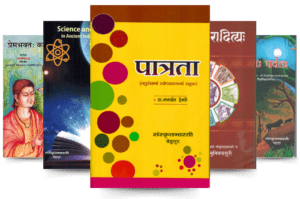
Once they start, it’s an intermittent mix of focussed study of our textbooks for 6-9 months at every level followed by participation in our annual weekend camp or shibhiram. Every class is focussed on conversational practice with themes or concepts re-iterated and re-enforced with greater depth at every level. Our adult textbooks typically progress as follows: for Level 1 it’s Abhyasa Pustakam, Abhyasa Darshini for Level 2, Gita Sopanam I or Bhāṣā Praveśa I for Level 3, Gita Sopanam II or Bhāṣā Praveśa II for Level 4 and Gītā Praveśa I for Level 5. Each covers the growing complexity from grammatical constructs like vibhaktis, vacanas, linga and lakāras or verb conjunctions. Based on their level of commitment, the entire course may span 3-4 years typically.
For smaller study groups, the students work with the same teacher for many years thus forming a unique bond. Youth and children have their own dedicated Bala Shikshanam program that our local kendras conduct. Generally someone who already knows an Indian language make faster progress as they can easily identify common words and constructs. They are able to break down shlokas or read texts like Ramayanam and understand their direct meaning.
We have some excellent examples of committed learners. Prem Kumar Mahodaya from New Jersey started in 2007 at our L1 class in Jahnavi. By building his expertise through svadhyaaya, he now authors poetry in Samskritam and is an authority in our United States organization! He curates the articles with Chatravani, publications from our members for SB USA. Among those of non-Indic origins as well, I recall an Asian gentleman who started at our Jahnavi camp. He attended the same level two times in a row, but progressed quickly after to master the language because of his strong motivation to understand certain Buddhist scriptures. There is also another gentleman in Seattle who has a masters degree in Vyakarana and teaches some of our advanced students.
At the end of the day, it takes two hands to clap. Students with a committed regimen of time investment daily for even 15-30 minutes make rapid advancements and contribute to not just their growth, but also the organization’s.
How are teachers trained?
In the United States, volunteers seek us out of interest after the first few levels. We have also encouraged students at higher levels to attend our Prashikshana Vargah or teacher training workshops. Here under the guidance of another experienced teacher, they begin by helping out by teaching smaller modules. For example, when teaching shishTAchArA, where common phrases like namaste, AgacCatu, kim avashyakam etc, they enact these conversations with the lead instructor. Later the instructor may ask them to teach modules like “yadi/tarhi” for example. They teach independently once they become confident in their presentation skills. They guide the material from concepts and topics that the students already know towards the newer topics. This is very important.
Regular re-training for teachers is needed. Teaching children, youth and adults require different strategies. Even among children, teaching 2-4th grade requires different presentation skills and attitude than older children.
In India around 2006, Samvada Shala was established in New Delhi followed later by one in Varanasi. Here throughout the year, anyone from anywhere in the world can participate in a 2 week training program that occurs on the 1st and 16th day every month. I joke that once you graduate from this you risk forgetting your mother tongue as you gain considerable confidence in spoken Samskritam!
This has been particularly useful for Samskritam teachers in India, who teach through the traditional translation methods. Many have gone back and created considerable impact. In fact I have seen 12th grade textbooks for Samskritam change over two decades. Earlier books for teaching Samskritam had more English words than Samskritam words, but the percentage has considerably reduced since. We have had several aspiring teachers from the United States who have gone on to train in Varanasi.
We conducted Samvada Shibiram in Virginia last year, where Mr. Vasuvaj Mahodaya from Bharatha, arrived to train our teachers. He is fully engaged having conducted hundreds of Sambhashanam Shibirams.
What are the opportunities for students to participate beyond classes?
Students who join even at the beginner levels are encouraged to volunteer in some capacity to help the organization as a karyakarta. This gives them exposure to practice their language as they conduct business or transact with other volunteers. Running our camps, marketing, managing our book store and website, and teaching our children and adults accelerates their learning. It increases their commitment to their own self study. It also fosters Satsangha or company of likeminded people and goals.
If you include children and adults, the organization may have about 5000-6000 members or students.
Could you share more about the distance learning opportunities for aspiring students?
For those who love to study independently, Samskrita Bharati has its classical progression starting with Praveśa, Paricaya, Śikṣā and ending in Kovida. We conduct classes for these levels and candidates have examinations at every level to clear. Our books are in different Indian languages like Oriya, Tamil or Kannada. In India this is conducted twice a year but here, it varies with every two months for Pravesha and every 6 months for Parichaya for example. All papers are graded in the United States itself.
In contrast, S2S is our more popular integrated program, where you register for the class. There is live interaction with your peers and instruction and it follows a semester system. Before we established S2S before Covid, we had about 100+ enrollments for Pravesha with 15-20 in Kovida. But the numbers have dwindled as most prefer our S2S with its active classroom engagement.
What are distance advanced learning opportunities for learners beyond L5?
We have a distance learning program, the Kovida Certification Program (KCP) which is a self-directed study with books and an examination. At the end they are awarded a certificate from SB in conjunction with Kavikula Guru Vishwavidhyalaya. Many of our L5, Kovida or S2S students have also obtained their Masters with the Hindu University of America, Florida with whom we have collaborated before.
What are the current challenges?
For any organization to succeed in the long term, it has to cultivate the love for the organization’s purpose in its youth. These young children will be taking over the mantle after all. While we have 51 Samskrita Kendrams (including Canada), there are several upcoming chapters that are not as active as we would like them to be. Maybe they conduct an occasional children’s class or meetup but momentum could be stronger.
In the Northern Bay Area, we have over 100 children attending bala kendras, in contrast to say Greenville, NC where about 10-15 children attend or San Antonio where about 8 children attend. On September 24 – 25, 1200 children began learning Samskritam, however not many move on to take it as a key foreign language option in high school. Our SAFL (Samskritam As A Foreign Language) program has about 500 high schoolers enrolled. We would love to see those numbers grow.
Of the 140 students who graduated in 2025 from high school, only 10 students stay on as active volunteers. We constantly discuss methods to engage our graduates better and not lose touch. For example, we have organized Yuva Chetnana Varga where our youth met with students from other parts of the world in Bali in 2023. Camp Dhimaih is also an opportunity for high school graduates to engage beyond to meet in Summer.
However, we should do better to inspire them to pass on their learning to the next generation. Covid was not kind either as our enrollment numbers were higher prior to 2020. While the engagement has been slowly increasing, I hope we see a better improvement. We would eventually love to see our high school graduates appreciate and pursue their self study in Samskritam in addition to whatever else they wish to pursue. Maybe even hold academic chairs in reputed universities here!